
- Mon - Sat 8:00 - 6:30, Sunday - CLOSED
- support@soundproofhub.com
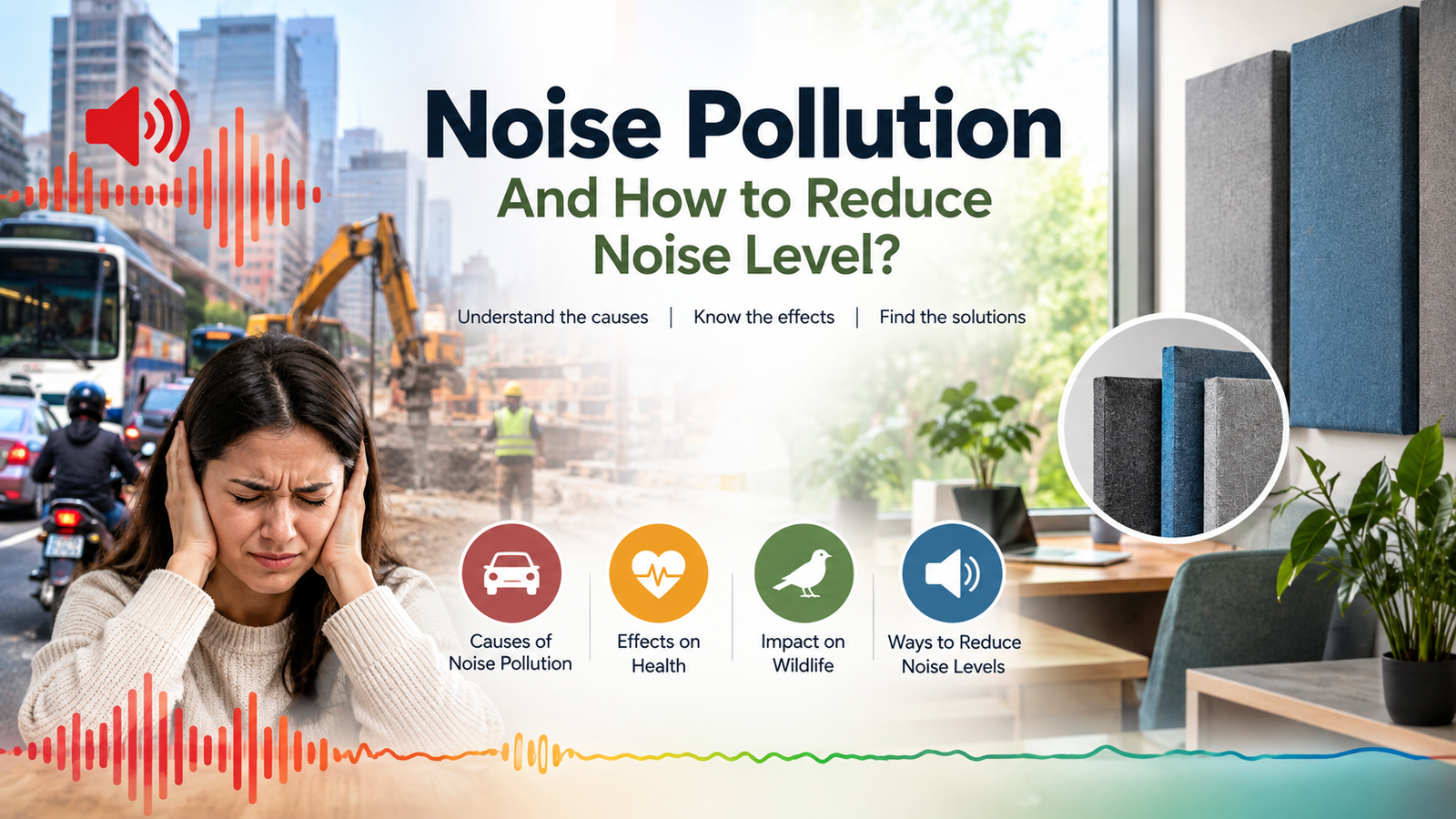
Noise Pollution And How to Reduce Noise Level?
13
October
Noise Pollution And How to Reduce Noise Level?
In the modern age, noise pollution is a part of life because we live in a growing country. Also, new inventions cause noise. Every machine produces noise, including human beings. In this blog post, we will discuss in detail how noise is produced and how to reduce the noise level.
What is Noise Pollution Definition
Noise pollution is the presence of unwanted or excessive sound that disturbs daily life and affects health. It commonly comes from traffic, construction, industrial machines, and loud music. Prolonged exposure can cause stress, sleep problems, hearing loss, and other health issues.
Understanding Noise and Its Impact on Health
Before solving the noise problems we will understand the noise and it’s impacts on health.
Musical Sounds vs. Noise
●Musical Sounds
We enjoy programs on radio or television by hearing sounds of different qualities. In musical programs, we hear sounds produced by instruments such as flutes, harmoniums, violins, drums, etc. These sounds have a pleasant effect on our ears and are known as musical sounds.
●What is Noise?
In contrast, some sounds produce unpleasant effects on our ears, such as the sounds of machinery, the slamming of doors, or the noise of traffic in big cities. These unpleasant sounds are called noise. Noise corresponds to irregular and sudden vibrations.
The Growing Problem of Noise Pollution
●Sources of Noise Pollution
Noise pollution has become a significant issue in big cities. It is caused by undesirable sounds that are harmful to human health and other species. Transportation equipment, heavy machinery, vehicle horns, hooters, and alarms are common sources.
Main Causes of Noise Pollution
The main causes of noise pollution include road traffic, construction work, factories, loud music, and household appliances. In busy cities, cars, buses, motorcycles, and vehicle horns create unwanted noise throughout the day. Construction equipment and industrial machines can also increase noise levels in nearby homes and workplaces.
Noise pollution from neighbours can be another problem, especially in buildings with thin walls. Loud televisions, music systems, barking dogs, and late-night activities can disturb sleep and daily routines. Identifying the main sources of noise pollution is the first step toward finding an effective solution.
●Effects of Noise on Health
Noise pollution negatively affects human health. Prolonged exposure can cause hearing loss, sleep disturbances, aggression, hypertension, and high stress levels. Noise can also interfere with communication, increasing the risk of accidents.
Effects of Noise Pollution on the Environment
Noise pollution affects more than human health. It can also disturb birds, pets, and other wildlife. Loud sounds may interfere with animal communication, feeding, breeding, and movement. Birds may struggle to hear warning calls or communicate with their young when traffic and construction noise become too loud.
Reducing unnecessary noise helps protect wildlife and creates a more comfortable environment for people and animals. Simple actions, such as avoiding unnecessary honking and keeping outdoor music at a reasonable volume, can make a difference.
●Safe Noise Levels
A safe level of noise depends on two factors: the volume of the noise and the period of exposure. Most countries recommend a noise level of 85-90 dB over an eight-hour workday to prevent health risks.
Steps to Managing a Noise Levels
-
Practical Ways to Control Noise Pollution at Home
There are several simple ways to reduce noise pollution at home. Install thick curtains, seal gaps around doors and windows, and use rugs to reduce sound reflections. Double-glazed windows can help limit traffic noise entering your rooms. For better indoor sound quality, soundproof panels absorb reflected sound and reduce echoes in offices, bedrooms, and living areas.
If outside noise is the main problem, consider improving wall insulation or installing suitable soundproofing materials. Acoustic panels are useful for controlling echoes, but they do not completely block loud sounds from outside. Choosing the right solution depends on the source of the noise and the level of sound reduction you need.
-
Reducing Noise Pollution
Noise pollution can be reduced by replacing noisy machinery with environmentally friendly alternatives, installing sound-reducing barriers, using hearing protection devices, or installing acoustic panels, heavy curtains, rugs, acoustic ceiling panels, acoustic rafts in noisy areas.
-
What are acoustic Panels?
Acoustic panels are noise-reducing panels and sound-absorbing panels. Acoustic panels are large, soft-furnished panels that can be strategically placed within any noisy space to improve sound quality by absorbing reflected sound or echoes and reverberations. Acoustic panels are the best choice for noise reduction whether you are in factories, offices, restaurants, halls, auditoriums, homes and music studios.
Additionally Noise-Reducing Solutions
In addition to acoustic panels, sound-reducing barriers such as walls or fences can block external noise from traffic or machinery. Double-glazed windows also help soundproof buildings by adding an extra layer that reduces outside noise transmission.
Hearing protection devices like earplugs or earmuffs are practical for personal protection, especially in loud work environments.
Lastly, using environmentally friendly machinery that operates at lower noise levels can significantly reduce industrial and construction noise. These measures collectively minimise noise pollution, creating healthier and quieter spaces for all places.
Conclusion
Noise pollution is an unavoidable part of modern life, but its harmful effects on health and well-being cannot be ignored. By understanding the sources and impacts of noise, we can take steps to manage and reduce it. We can create soundproof spaces by using noise-reducing panels and creating a more peaceful environment for both humans and wildlife.


Muhammad Zeeshan
Muhammad Zeeshan is an SEO expert and content writer, specializing in link building (SaaS, Tech, Business, and Home Improvements). I am very passionate about search engine optimization, backlink building, and guest blogging. I can help you in attracting a new audience and in achieving a higher rating.