
- Mon - Sat 8:00 - 6:30, Sunday - CLOSED
- support@soundproofhub.com
Dealing with Noise from Neighbours

5
July
Dealing with Noise from Neighbours
Living in close proximity to others means we all have to accept a certain amount of sound from those around us. However, excessive or continuous noise can become a significant problem. This guide outlines how to handle noise issues, what the law says in Scotland, and the practical steps you can take to resolve disputes.
Understanding Noise Disruption
When considering dealing with noise from neighbours, it is important to understand what the law considers acceptable. There is a legal distinction between everyday sounds and actionable noise pollution.

What is Antisocial Noise?
Under Scottish law, specifically the Antisocial Behaviour etc. (Scotland) Act 2004, noise becomes an antisocial disturbance if it causes, or is likely to cause, alarm, distress, nuisance, or annoyance to a reasonable person.
This type of behaviour interferes with the standard use and enjoyment of your property, particularly during quiet hours. Common dealing with noise from neighbours antisocial issues include:
-
Dealing with noise from neighbours loud music or televisions played at an excessive volume.
-
Frequent, rowdy house parties (do dealing with noise from neighbours party disturbances).
-
Dealing with noise from neighbours barking dog or other persistently noisy pets.
-
Shouting, arguing, or slamming doors repeatedly.
-
Dealing with noise from neighbours diy projects or dealing with noise from neighbours building work happening at unreasonable hours.
Everyday Household Noise
Many complaints involve everyday sounds. While these can be annoying—especially when dealing with noise from neighbours in flats—they do not usually legally qualify as antisocial behaviour. Knowing what is acceptable noise from neighbours helps clarify whether formal action is possible.
Examples of normal household sounds include:
-
Footsteps on laminate flooring or stairs (dealing with noise from neighbours floor or dealing with noise from neighbours ceiling friction).
-
Children playing during the day (dealing with noise from neighbours child sounds).
-
Appliances like a dealing with noise from neighbours washing machine or a dealing with noise from neighbours extractor fan operating during normal daytime hours.
-
Low-level noise from a dealing with noise from neighbours boiler or pipes.
-
Normal conversation and general movement.
First Steps: Resolving the Issue Amicably
In many cases, your neighbour may not realise does dealing with noise from neighbours at night or during the day cause you distress. Taking an early, calm approach is often the fastest way to find a solution.
When to Speak to Neighbours
Unless you feel unsafe doing so, your first step when dealing with a noisy neighbour should be an informal chat. Approach them when the noise isn’t happening, or gently knock when it is, provided the situation feels safe. Approach the conversation calmly rather than when you are feeling dealing with noise from neighbours angry or frustrated.
Tips for Resolving Disputes Amicably
-
Avoid being confrontational: Do not approach them if you feel dealing with noise from neighbours confrontational or aggressive. This can make the neighbour defensive or lead to dealing with noise from neighbours abusive or dealing with noise from neighbours hostile reactions.
-
Explain the impact: State clearly how the sound affects you, such as dealing with noise from neighbours making me ill through lack of sleep.
-
Discuss practical solutions: Talk about how to reduce noise from neighbours. For instance, you could agree on specific times for dealing with noise from neighbours diy tasks or ask them to move a television away from a shared wall.
-
Keep it polite: Avoid dealing with noise from neighbours awkward standoffs by focusing on the sound itself, not their character.
Mediation Services
If a direct conversation does not work, or if you find the prospect too daunting, community mediation is a highly effective next step.
Mediation involves an independent third party who helps both sides talk through the issue and reach an agreement on how to stop noise from neighbours. Most local councils in Scotland provide free, confidential mediation services to residents.
Gathering Evidence
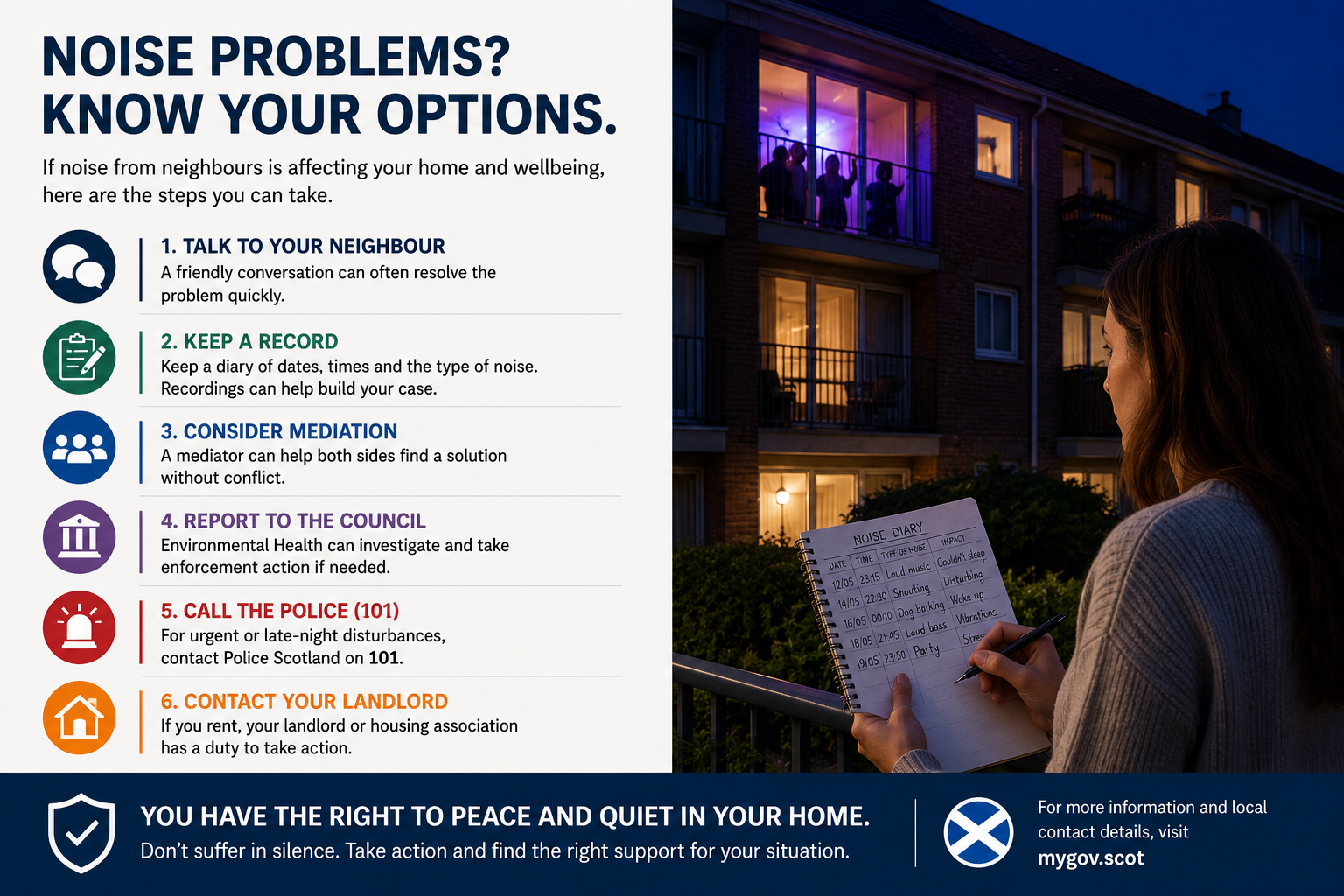
If informal approaches fail and you need to know where to complain if neighbours making noise, you will need evidence to support your case.
Keeping a Noise Diary
A detailed log is crucial when learning how to deal with noise disturbance legally. Your diary should track the pattern of the disturbance and document:
-
The date and exact time the noise started and stopped.
-
The type of noise (e.g., dealing with noise from neighbours music, shouting, or a dealing with noise from neighbours dog barking).
-
The volume and how it felt in your home (e.g., could you hear it over your own TV?).
-
How the noise affected you (e.g., woke you up, prevented your child from sleeping).
Recording Evidence
In addition to a diary, you can log audio or video evidence of the disruption. Be careful to only record from within your own property to avoid dealing with noise from neighbours harassing or privacy complaints. Note down any specific measurements if you use an app, though councils will use calibrated equipment if they investigate dealing with noise from neighbours decibels.
Reporting the Noise to Authorities
When informal efforts fail, you have several options regarding who deals with noisy neighbours in Scotland.
Reporting Noise to the Local Council
Your local authority has primary responsibility for dealing with a noise complaint. You can contact the Environmental Health department to report dealing with noise from neighbours nuisance issues.
Many Scottish councils run a 24-hour Antisocial Behaviour helpline or an out-of-hours noise team. Officers can visit your home to measure the noise levels. If they find the sound exceeds legal limits, they can take immediate enforcement action.
Contacting a Landlord or Housing Association
If the person causing the disruption is a tenant, you should report the issue to their landlord or housing association.
Most tenancy agreements in Scotland contain strict clauses regarding antisocial behaviour. Landlords have a legal responsibility to ensure their tenants do not cause a persistent nuisance to the local community.
Reporting Noise to the Police (101)
For immediate, severe incidents—such as an out-of-control party late at night—you can call Police Scotland on the non-emergency number, 101.
The police can attend to ask for the noise to be lowered. However, they generally do not deal with long-term, ongoing domestic noise disputes unless there is criminal activity, such as a breach of the peace or dealing with noise from neighbours violent behaviour.

image source: Pexels.com
What Action Authorities Can Take
Scottish authorities have a range of legal powers to how to deter noisy neighbours who refuse to cooperate.
| Action Type | Description | Who Enforces It |
| Warning Notices | Issued on the spot if noise exceeds permitted levels during quiet hours. | Council Noise Officers / Police |
| Fixed Penalty Notices | An immediate fine (usually £100) if a warning notice is ignored. | Council Noise Officers |
| Seizure of Equipment | Authority to enter a property to confiscate noise-making equipment like sound systems and TVs. | Council (with Police support) |
| Antisocial Behaviour Orders (ASBOs) | Legal orders from a court forcing a person to stop specific behaviours. | Local Council / Registered Landlords |
| Eviction Proceedings | Legal action to remove a tenant from a property due to persistent breaches of their tenancy agreement. | Landlords / Housing Associations |
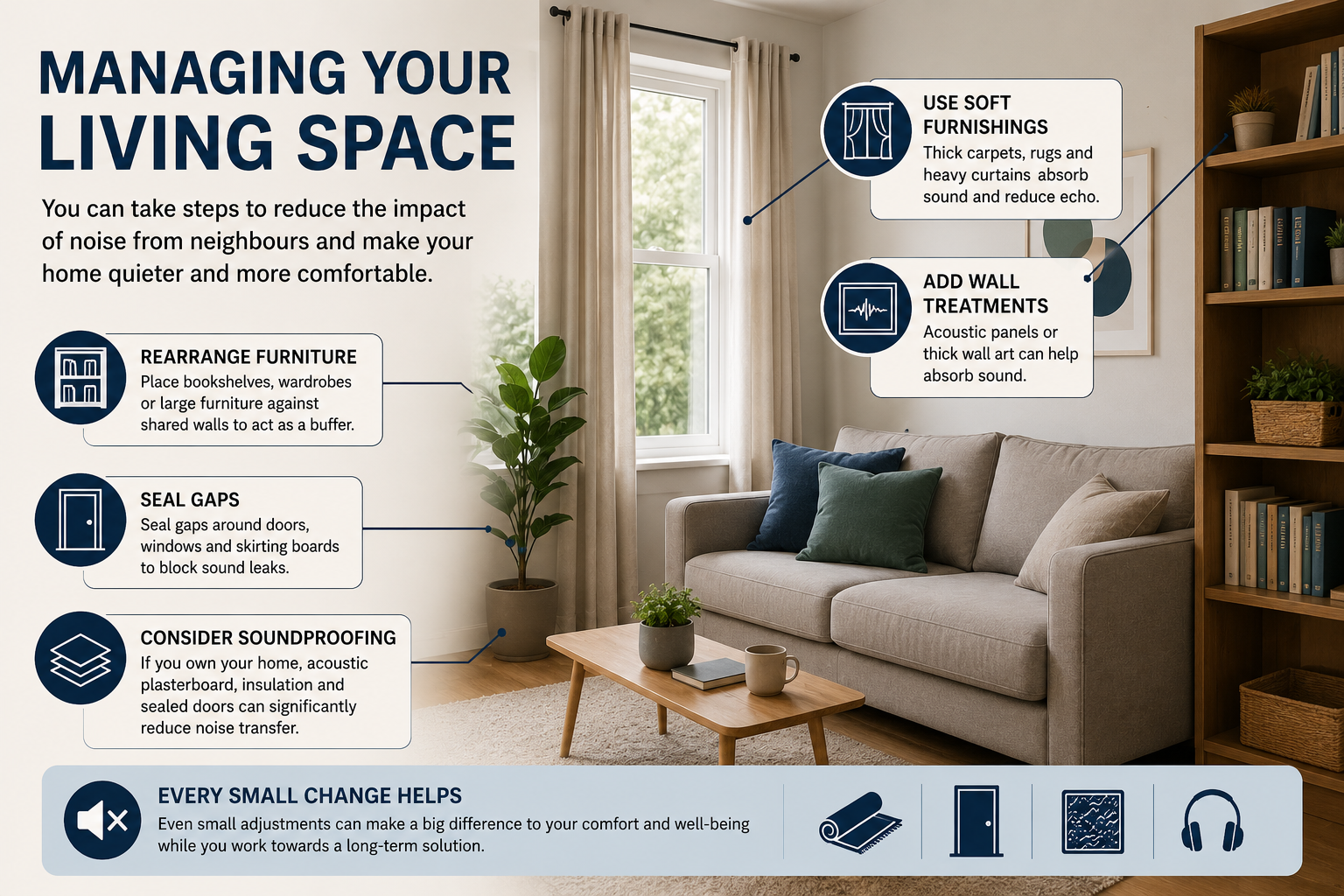
Managing Your Living Space
While you wait for authorities to act, or if the sound is legal everyday noise that you cannot formally report, you may want to look into how to block out noise from neighbours.
Simple adjustments can help lower the impact of sound transmission through shared structures:
-
Rearrange your furniture: Place heavy bookshelves or wardrobes against shared walls to act as a buffer.
-
Use soft furnishings: Thick carpets, rugs, and heavy soundproof curtains help absorb sound waves within rooms.
-
Consider soundproofing: If you own your home, sealing gaps around doors or adding acoustic plasterboard can assist with dealing with noise from neighbours building or structure transmission.



Muhammad Zeeshan
Muhammad Zeeshan is an SEO expert and content writer, specializing in link building (SaaS, Tech, Business, and Home Improvements). I am very passionate about search engine optimization, backlink building, and guest blogging. I can help you in attracting a new audience and in achieving a higher rating.