
- Mon - Sat 8:00 - 6:30, Sunday - CLOSED
- support@soundproofhub.com
Acoustic Panels
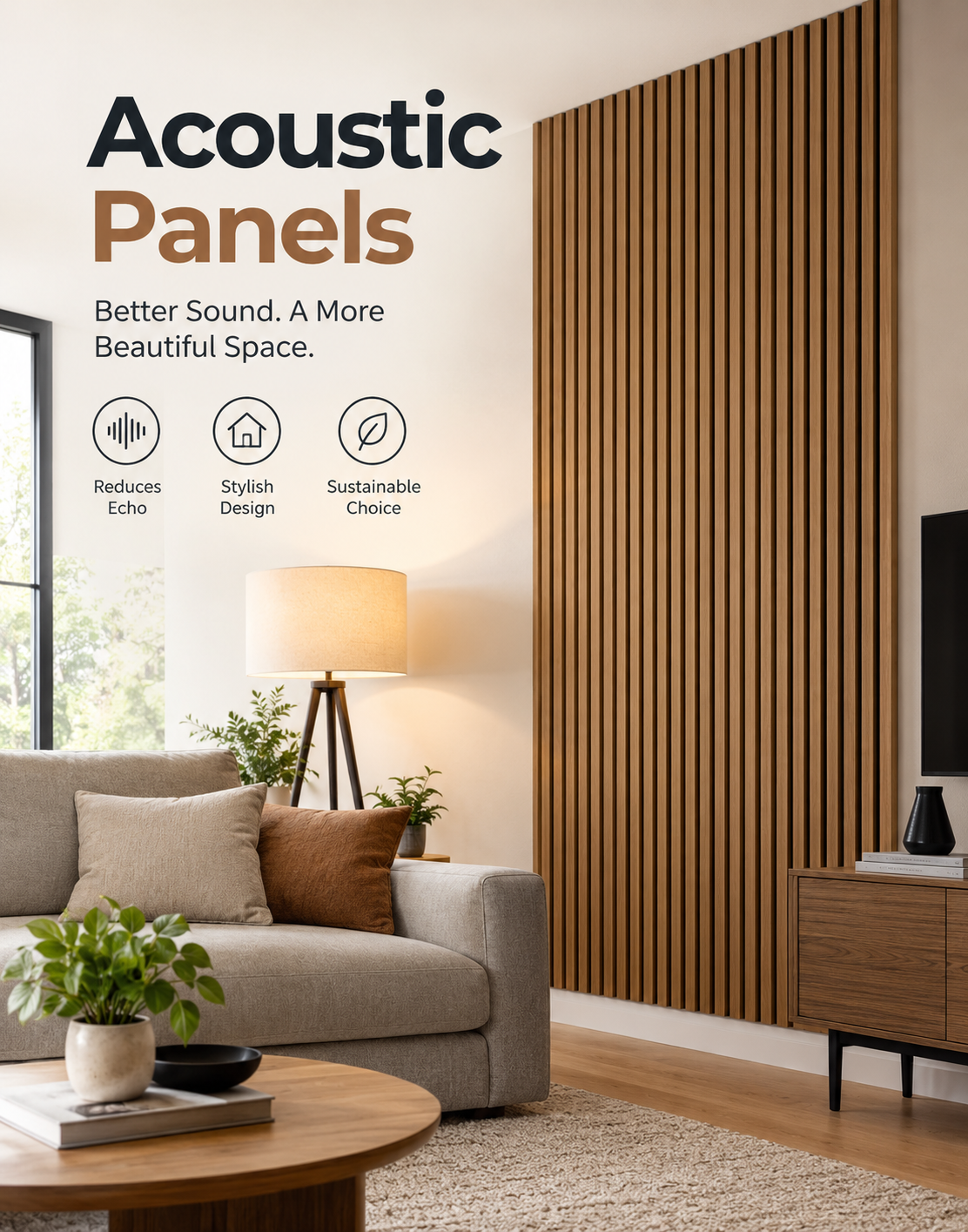
Acoustic panels are a practical way to improve the sound quality of a room without compromising its appearance. Whether you’re designing a comfortable living room, creating a productive home office, or upgrading a recording studio, the right panels can reduce unwanted echoes and make conversations, music, and television sound clearer.
Available in a variety of materials, colours, finishes, and sizes, modern acoustic panels combine sound absorption with attractive interior design. From natural oak slat panels to fabric-wrapped absorbers, there are options to suit almost every space and budget.
In this guide, we’ll explain how acoustic panels work, explore the different types available, share ideas for using them around your home or workplace, and cover everything you need to know before buying and installing them.
What Are Acoustic Panels and How Do They Work?
Acoustic panels are sound-absorbing products designed to reduce reflections from hard surfaces such as plastered walls, ceilings, glass, and flooring. When sound bounces repeatedly around a room, it creates echoes and reverberation that can make speech difficult to understand and everyday noise more noticeable.
Panels absorb some of this reflected sound energy, helping create a more balanced acoustic environment. Their effectiveness depends on the material, thickness, mounting method, and frequencies you want to control.
For example, acoustic panels in a home office can improve speech clarity during video calls, while panels in a living room can make conversations and television audio more comfortable to listen to.
Do Acoustic Panels Actually Work?
Yes, properly selected acoustic panels can reduce echo and reverberation. However, their performance varies depending on their construction, placement, and the room itself.
It’s important to understand that acoustic treatment is not the same as soundproofing. Panels primarily manage sound within a space rather than preventing noise from travelling through walls, floors, or ceilings.
If you’re dealing with noisy neighbours or traffic outside, you may need additional measures such as sealing gaps, improving door and window seals, or upgrading the wall or ceiling construction.
Types of Acoustic Panels for Different Spaces
Choosing the right panel starts with understanding the available materials and their intended uses.
Wood Slat Acoustic Panels
Wood slat acoustic panels combine decorative timber or wood-effect slats with an acoustic backing, often made from felt. They are particularly popular in contemporary interiors because they introduce natural texture while helping control sound reflections.
Common finishes include:
- Natural oak acoustic panels: Ideal for warm, Scandinavian-inspired interiors.
- Walnut acoustic panels: Suitable for richer, more traditional or luxurious designs.
- Black acoustic panels: Create contrast in modern living rooms and media walls.
- Grey oak and dark oak panels: Complement neutral colour schemes and contemporary furniture.
- White and beige acoustic panels: Work well in bright, minimalist spaces.
Wood slat designs are suitable for feature walls, home offices, bedrooms, and television walls. Their actual acoustic performance depends on the complete panel construction and the backing used.
Fabric-Wrapped Acoustic Panels
Fabric-wrapped panels typically contain a sound-absorbing core covered with decorative fabric. They are available in different colours, shapes, thicknesses, and sizes, making them useful for residential and commercial applications.
These panels are particularly effective for managing mid- and high-frequency reflections when appropriately specified. They are commonly installed in meeting rooms, music studios, home cinemas, classrooms, and offices.
For commercial projects, check the manufacturer’s published absorption data and fire-performance classification before choosing a product.
Acoustic Foam Panels
Acoustic foam panels are lightweight products commonly used in home studios, practice rooms, and recording spaces. Their textured surfaces, including wedge and egg-crate designs, provide an accessible way to treat certain sound reflections.
However, foam quality and thickness vary considerably. Thin decorative foam may offer limited low-frequency absorption, and foam panels should not automatically be considered equivalent to engineered acoustic absorbers.
Ceiling and Suspended Acoustic Panels
Acoustic panels for ceilings are useful when wall space is limited or sound reflections from above contribute to a room’s poor acoustics.
Depending on the application, options include ceiling-mounted panels, suspended acoustic rafts, and baffles. These solutions are particularly valuable in open-plan offices, restaurants, schools, and rooms with high ceilings.
Always confirm that the mounting system is suitable for the ceiling structure and the panel’s weight.
Where Should You Install Acoustic Panels?
Correct placement can make a significant difference to the results. Instead of covering every available surface, identify the areas where sound reflections are most troublesome.
Acoustic Panels for Walls
Acoustic panels for walls are commonly installed at reflection points, on large uninterrupted wall surfaces, or behind the main listening position.
In a living room, a decorative slat wall behind the television can combine visual interest with some acoustic improvement. In a meeting room, fabric-wrapped panels positioned around speaking and listening areas can help make conversations clearer.
Acoustic Panels for Bedrooms
Acoustic panels for bedrooms can help reduce reflections and create a calmer listening environment. Popular locations include the wall behind the bed, either side of the headboard, and the wall opposite the bed.
Using acoustic panels as a headboard or creating a feature wall behind the bed can introduce texture without requiring extensive decorative changes.
For bedroom ideas, consider light oak, beige, cream, soft grey, or muted green finishes. Remember that panels may improve the room’s internal acoustics, but they won’t necessarily block snoring, traffic, or noise from neighbouring rooms.
Acoustic Panels in Living Rooms and Media Walls
Living rooms often combine hard flooring, windows, painted walls, and large television screens. These surfaces can contribute to noticeable reflections, particularly in open-plan layouts.
Consider these design ideas:
- Install wood slat panels behind the television.
- Add acoustic treatment to a large, bare side wall.
- Combine panels with shelves or cabinetry to create a balanced media wall.
- Position absorbers strategically around a home cinema listening area.
When installing acoustic panels around a chimney breast or fireplace wall, check the manufacturer’s clearance requirements and relevant fire-safety guidance. Do not cover ventilation openings or install combustible products too close to heat sources.
Acoustic Panels for Offices and Commercial Spaces
In offices, excessive reverberation can make meetings tiring and conversations difficult to follow. Acoustic treatment is particularly useful in glass-heavy meeting rooms, open-plan workspaces, reception areas, and conference rooms.
For larger spaces, consider combining wall panels with ceiling rafts or suspended baffles. This approach can provide more effective coverage without relying entirely on decorative wall treatments.
Acoustic Panels for Ceilings
Acoustic panels on ceilings can help manage reflections in rooms where wall installation is impractical. They are especially useful in open-plan interiors, restaurants, classrooms, and offices with hard ceiling finishes.
Before installation, consider ceiling height, lighting, sprinklers, ventilation, and access for maintenance. Use suitable fixings and follow the manufacturer’s installation instructions.
Acoustic Panels Design Ideas: Make Sound Treatment Part of Your Interior
Modern acoustic treatment doesn’t need to look industrial or purely functional. With careful planning, panels can become an attractive feature of the room.
Choose the Right Colour and Finish
The best acoustic panels colours depend on the surrounding furniture, flooring, lighting, and wall paint.
Natural oak suits warm, understated interiors, while black and dark grey create a dramatic contrast. White, cream, and beige panels can help maintain a bright appearance, particularly in smaller rooms.
For a distinctive feature wall, consider contrasting slat finishes or combining panels with painted surfaces. Sample panels can help you assess colour and texture under your own lighting before committing to a larger order.
Add Integrated Lighting
Acoustic panels with LED lights can create an attractive focal point in a bedroom, hallway, or television area. LED strip lights may be fitted along suitable panel edges or within a purpose-designed lighting detail.
When planning acoustic panels and lighting together, check whether the panel system accommodates the proposed lighting and cable routing. Electrical work should be completed safely, with suitable access for future maintenance.
Install Panels Around Windows, Sockets and Coving
Panels can often be adapted to fit around window frames, electrical sockets, switches, and coving, but accurate measurements are essential.
Before cutting, mark the position of every obstruction and check the manufacturer’s recommended cutting method. Never cut into a panel without first confirming that the area is clear of concealed electrical cables and other services.
Where possible, use suitable trims and accessories for a neat finish around edges and corners.
How to Choose the Right Acoustic Panels
Before buying, consider the room’s acoustic problems, the intended use, the available installation space, and your budget.
1. Identify Your Main Acoustic Problem
Are you trying to reduce echo during conversations, improve music playback, or make a conference room more comfortable?
For speech clarity, appropriately rated wall or ceiling absorbers are often a useful starting point. Music studios and home cinemas may require a more considered combination of broadband absorbers, bass traps, and, where appropriate, diffusers.
2. Check Materials, Thickness and Performance
The appearance of a panel doesn’t tell you everything about its acoustic performance. Review the manufacturer’s technical information, including absorption ratings, test conditions, thickness, backing material, and recommended installation method.
Thicker absorbers or systems with an air gap can improve absorption at lower frequencies in suitable configurations, although results depend on the complete assembly.
3. Measure the Available Space
Acoustic panels come in different dimensions, from compact decorative tiles to large wall panels. Some wood slat products are available in formats such as 2400 x 600 mm, while fabric panels and ceiling systems may use different sizes.
Measure the wall or ceiling carefully and account for sockets, switches, doors, windows, coving, and skirting boards. If you need a made-to-measure finish, check whether the supplier offers cut-to-size options.
4. Compare Cost and Installation Requirements
Acoustic panels prices vary according to materials, dimensions, finish, acoustic performance, and fixing requirements.
Cheap acoustic panels may suit basic decorative projects, but low prices alone do not indicate how well a product will perform. Compare the total project cost, including adhesive or screws, trims, delivery, cutting tools, and professional installation if required.
If you’re searching for acoustic panels in the UK, compare specialist suppliers and general retailers, including B&Q or Wickes where relevant products are available. Check current stock, specifications, delivery terms, and returns policies rather than assuming every retailer carries the same range.
How to Install Acoustic Panels
Many decorative acoustic panels are suitable for DIY installation, provided the wall or ceiling is appropriate and the correct fixing method is used.
Follow these practical steps:
- Prepare the surface: Ensure the wall is clean, dry, stable, and suitable for the chosen fixings.
- Measure and mark: Use a tape measure and spirit level to establish the panel layout.
- Locate hidden services: Check for concealed cables and pipes before drilling or cutting.
- Choose the fixing method: Depending on the product and surface, installation may involve screws, suitable wall anchors, adhesive, or a manufacturer’s mounting system.
- Cut carefully: Use the recommended tools and protect exposed edges where necessary.
- Fit trims and accessories: Install suitable end trims, joining pieces, and cable-management components for a professional finish.
- Inspect the result: Confirm that the panels are secure and that electrical fittings, ventilation, and other essential features remain accessible.
Acoustic Panels: Glue or Screw?
The choice depends on the panel’s weight, backing, wall condition, and the manufacturer’s instructions.
Screws and suitable anchors can provide a secure mechanical fixing, while compatible adhesive may be suitable for certain lightweight panels and stable surfaces. Heavy panels and ceiling installations may require specialised support.
For renters, removable mounting systems may be worth considering, but always check their load rating and whether removal could damage the paint or plaster.
Common Acoustic Panel Mistakes to Avoid
Even good-quality products can disappoint if they’re chosen or installed incorrectly.
- Expecting complete soundproofing: Acoustic panels reduce reflections; they don’t automatically block sound travelling through walls.
- Choosing panels based on appearance alone: Check performance data as well as colour and finish.
- Covering every wall unnecessarily: Start with the main reflection points and assess the results.
- Ignoring low-frequency problems: Thin decorative panels may not adequately control bass.
- Overlooking fire safety: Check the product’s fire classification and suitability for the intended space.
- Blocking sockets or ventilation: Plan the layout around electrical fittings and building services.
- Using unsuitable adhesive or fixings: Follow the product instructions and confirm the wall or ceiling can support the installation.
A measured approach will help you achieve a more effective result without unnecessary expense.
Frequently Asked Questions About Acoustic Panels
Do acoustic panels keep sound out?
Not on their own. Acoustic panels absorb reflected sound inside a room, whereas soundproofing requires measures that reduce sound transmission through the building structure.
How many acoustic panels do I need?
The number depends on room size, surface materials, ceiling height, the type of noise, and the panels’ absorption performance. For a small room, begin by identifying the main reflection points and consult the manufacturer’s coverage guidance. Larger or more demanding spaces may benefit from an acoustic assessment.
Can acoustic panels be cut to size?
Many panels can be cut, but the correct method depends on the material and construction. Wood slat panels, fabric-wrapped absorbers, and foam products require different tools and finishing techniques. Always check the manufacturer’s instructions before cutting.
Are acoustic panels suitable for bathrooms and kitchens?
Some products may be suitable for particular moisture conditions, but many standard wood, felt, and fabric panels are not designed for consistently damp environments. Check the manufacturer’s moisture-resistance and cleaning guidance before installation.
Can acoustic panels be installed horizontally?
Yes, some products can be installed vertically or horizontally. However, the mounting system, appearance, and acoustic performance may vary with the installation method. Follow the manufacturer’s guidance for the specific panel.
Where can I buy acoustic panels near me?
You can compare specialist acoustic suppliers and selected home-improvement retailers online or locally. Search for acoustic panels near you, then check available sizes, finishes, technical specifications, delivery options, and installation guidance before ordering.
Final Recommendation
Acoustic panels offer a practical way to improve room acoustics while enhancing the appearance of your home or workplace. From decorative wood slat panels and fabric-wrapped absorbers to ceiling-mounted systems, the right choice depends on your space, acoustic requirements, design preferences, and budget.
Start by identifying the main source of unwanted reverberation, compare the available materials and performance data, and plan your panel placement carefully. With the right combination of acoustic performance and thoughtful design, you can create a space that looks better and sounds more comfortable every day.